


Three Large Sycamore Pollards Near Derriford, Plymouth
Updated: Oct 2
Project Snapshot

This project involved pollarding three large, mature sycamore trees near Derriford, Plymouth, reducing them from approximately 50ft to around 20ft.
The trees were situated within a large forested site, but their position created several challenges. A building ran along one side of the trees, fencing bordered another, and an open-top electrical substation was directly below the working area.
Before starting, we carried out a TPO check as the trees were located on the boundary of an area covered by a blanket Tree Preservation Order. The proposed work was checked with the local council and given the go ahead.
We also contacted the electricity company responsible for the substation to discuss the work and obtain specific safety advice. Their team briefed us on the risks associated with branches potentially falling into the open electrical equipment.
The pollarding was carried out by a three man team over one day, using rope and harness climbing techniques and controlled rigging to safely lower branches where required.
The aim was to bring the trees down to a more manageable height, allowing more light into neighboring houses and gardens while retaining the mature sycamores for many years to come.
The Challenge

There were several factors that made this project more complicated than a straightforward pollard.
The three sycamores were large, mature trees standing at approximately 50ft tall. Although they were growing within a sizable woodland area, their position meant there was limited room for branches to fall freely.
A building was situated along one side of the trees, with fencing on another. Most importantly, an open top electrical substation was positioned directly beneath the working area.
This meant that simply cutting branches and allowing them to fall was not appropriate. A large proportion of the branches needed to be carefully controlled and lowered using different rigging techniques to ensure they could be brought safely to the ground without entering the substation or damaging surrounding property.
The location also bordered a neighboring care home car park. We therefore contacted the care home staff, gained permission to work from the car park and established a no go zone around the working area to keep pedestrians away from the tree work.
The Solution
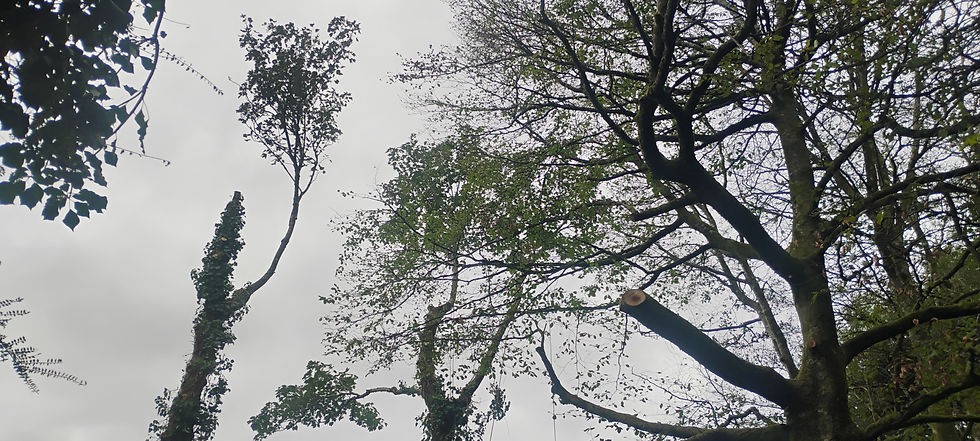
Before beginning work, we dealt with the necessary permissions and site specific safety considerations.
A TPO check was carried out because the trees were on the boundary of a blanket Tree Preservation Order area. The proposed pollarding was submitted to the local council and given the go ahead before work commenced.
Because the electrical substation was directly beneath the trees and had an open top, we also contacted the electricity company responsible for the equipment. They provided specific advice and briefed us on the potential dangers of branches falling into the substation.
The work was then planned around these restrictions.
On the day, conditions were dry and slightly overcast, providing a comfortable temperature for the team and good working conditions.
Our three man team established a controlled working area around the trees, with pedestrians kept clear while climbing and dismantling operations were taking place.
The trees were climbed using rope and harness systems, allowing the climbers to work systematically through the crowns.
Controlled Pollarding

The three sycamores were reduced from approximately 50ft to around 20ft.
Because of the surrounding building, fencing and electrical substation, many of the larger branches could not simply be allowed to fall.
Instead, branches were cut and controlled using rigging and lowering techniques, with the rigging arrangement adapted to suit the position of each section.
This allowed the team to direct branches safely away from the substation and surrounding structures while maintaining control of the material throughout the dismantling process.
The result was a substantial reduction in the height and spread of the trees while retaining their main structures and allowing them to remain as established features of the woodland.
Managing the Electrical Substation and Surrounding Area

The open top electrical substation directly beneath the trees was one of the most important considerations during the work.
Before starting, we contacted the electricity company and discussed the proposed work with them. Their team provided a specific briefing on the potential consequences of branches falling into the substation.
This information was incorporated into our working method, with controlled rigging used where necessary to prevent branches from falling freely into the area below.
The building and fencing surrounding the trees also restricted the available landing areas, while the neighbouring care home car park meant pedestrian access needed to be managed.
A clearly defined no go zone was established around the work area, and care home staff were informed before work began.
This allowed the team to carry out the pollarding while maintaining control of the surrounding area and keeping people away from falling timber.
Wildlife-Friendly Management of the Arisings

One advantage of working within such a large forested site was that the tree arisings did not need to be removed from the property.
Suitable timber and brash were stacked within the woodland to provide habitat for local wildlife.
Rather than removing all of the material from site, the arisings could therefore be retained as part of the woodland environment, providing shelter and habitat for insects and other wildlife.
The Results

All three mature sycamores were successfully reduced from approximately 50ft to around 20ft, significantly reducing their overall height while retaining the trees for future management.
The pollarding was designed to allow more light into the neighboring houses and gardens while establishing a manageable height that can be maintained through a planned cutting cycle over the coming years.
The project provided:
Three large mature sycamores reduced from approximately 50ft to 20ft
Increased light reaching neighboring houses and gardens
A manageable height for future tree management
Controlled removal of branches around the building and fencing
Safe working around the open-top electrical substation
TPO checks and council approval before work began
Pedestrian access controlled around the work area
Timber and brash retained on site as wildlife habitat
The work completed by a three-man team in one day
The project required a combination of technical climbing, controlled rigging and careful site management due to the unusual combination of mature trees, surrounding buildings, fencing, a care home and an electrical substation directly below the working area.
By reducing the trees to a manageable height rather than removing them entirely, they can now remain as established trees while being managed through a planned program of future pollarding.
Need Help With Tree Pollarding in Plymouth?
Whitefords Tree Care provides professional tree surgery, tree removal, tree pruning, dangerous tree work and hedge services throughout Plymouth, Devon and surrounding areas.
If you have large trees that are becoming difficult to manage, blocking light or growing close to buildings, boundaries or other sensitive areas, we can assess the trees and recommend a suitable management approach.


Comments