


The Complete Guide to Hedge Cutting in Cornwall: Best Times, Nesting Birds & Expert Advice

A well maintained hedge can completely transform the appearance of your property. Whether it's creating privacy, improving kerb appeal, or keeping your garden tidy, regular hedge trimming is one of the best investments you can make.
At Whitefords Tree Care, we provide professional hedge cutting services throughout Liskeard, East Cornwall, West Devon, and the surrounding areas. In this guide, we will explain the best time to cut your hedges, what the law says about nesting birds, and how regular maintenance keeps your hedges healthy for years to come.
Why Regular Hedge Cutting Matters
Many homeowners wait until a hedge has become too big before arranging a trim. Unfortunately, leaving it too long often means a much bigger job and in some cases, a hedge that can never fully recover.
Regular trimming helps to:
Encourage thick, healthy growth
Maintain a neat appearance
Prevent hedges blocking paths and driveways
Reduce shading over gardens
Improve road visibility
Prevent branches damaging fences or buildings
Save money by avoiding major reductions later

When Is the Best Time to Trim a Hedge?
In Cornwall and Devon, most garden hedges benefit from trimming once or twice each year.
Generally speaking:
Spring (March–May)
Light maintenance trims may be suitable, but this is also the start of bird nesting season, so extra care is essential.
Summer (June–August)
Fast-growing hedges such as Leylandii often need trimming during summer to stop them becoming unmanageable.
Autumn (September–October)
This is one of the best times for many species, allowing the hedge to stay neat throughout winter.

Bird Nesting Season – Wildlife Always Comes First
One of the most important considerations when hedge trimming is protecting nesting birds.
Many birds choose dense hedges as safe places to raise their young between March and August, although nesting can begin earlier or continue later depending on the weather.
Before we carry out any hedge work, we always carry out a thorough visual inspection for active nests.
If we discover an occupied nest, we will explain the situation and advise delaying the work until the young birds have safely fledged.
Protecting wildlife isn't just good practice, it's also a legal requirement under UK wildlife legislation.

Common Hedges We Trim
Every hedge species grows differently and requires a slightly different approach.
Some of the most common hedges we work on include:
Leylandii
Laurel
Beech
Privet
Hawthorn
Mixed native hedges
Conifer hedges
Yew hedges
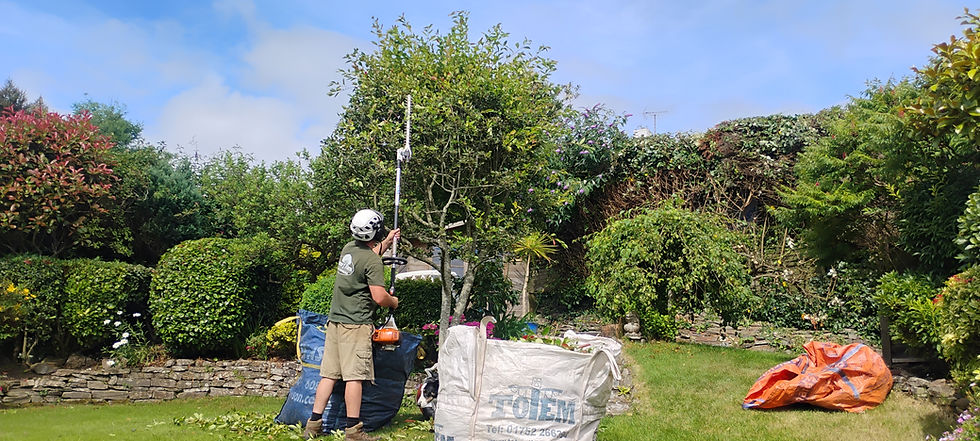
Whether your hedge is a small garden feature or a large boundary hedge, using the correct cutting techniques helps keep it healthy and attractive.
How Often Should a Hedge Be Cut?
Every hedge is different, but as a general guide:
Hedge Type | Recommended Frequency |
Leylandii | 2–3 times per year |
Laurel | Once or twice per year |
Privet | 2–3 times per year |
Beech | Once per year |
Hawthorn | Once per year |
Mixed Native Hedges | Once every year or two |
Regular maintenance is usually far easier and more affordable than leaving a hedge for several years before cutting it back.
Local Conditions in Cornwall and West Devon
Living in East Cornwall and West Devon means our hedges often experience rapid growth thanks to mild temperatures and regular rainfall.
Coastal areas around Looe and Saltash can experience strong winds that affect hedge shape, while more exposed inland areas near Bodmin Moor and Dartmoor often benefit from thicker, well-maintained shelter hedges.
Keeping hedges properly maintained helps them stay strong against Cornwall's changing weather.

Signs Your Hedge Needs Professional Attention
You may want to arrange a hedge trim if you notice:
Branches hanging over pavements
Reduced natural light in your garden
Hedges growing into neighboring properties
Uneven or untidy growth
Dead sections appearing
Difficulty accessing paths or driveways
Addressing these issues early usually prevents much larger work later.

Why Choose Whitefords Tree Care?
We're proud to provide professional hedge trimming throughout:
Every hedge is assessed individually, and we always work with care and respect for your property and local wildlife.
Our aim is simple: leave your hedge looking tidy, healthy, and professionally maintained.

Need Your Hedge Trimmed?
If your hedge has grown out of control or simply needs its annual tidy up, we will be happy to help.
Whether it's a small garden hedge or a large boundary hedge, Whitefords Tree Care provides reliable, professional hedge cutting across Liskeard, East Cornwall, and West Devon.
Contact us today for a free, no-obligation quote and let us help keep your garden looking its best.


Comments